Mightbound: Besieged is a mobile 2D grand strategy game. Choose a faction and fight for dominance — or simply to survive. Every campaign plays out on a randomly generated map, with resources and settlements placed differently each time. A lucky start can give you a clear edge; a rough one can turn the opening moves into a real test.
Release Status
The game is currently in development. The first release is planned for Android and IOs — coming soon.
Follow us on social media for announcements and progress updates. You can also get in touch via our Contacts page.
The Map
The world is divided into regions. Each region has a capital city and may contain one or more villages.
- Capturing a city transfers control of the entire region to your faction.
- Capturing a village brings it under your control and cuts off the region owner from its income.
Because the map is procedurally generated, no campaigns follow the same geography. Where settlements sit — and how valuable they are — shapes every strategy from the first turn.
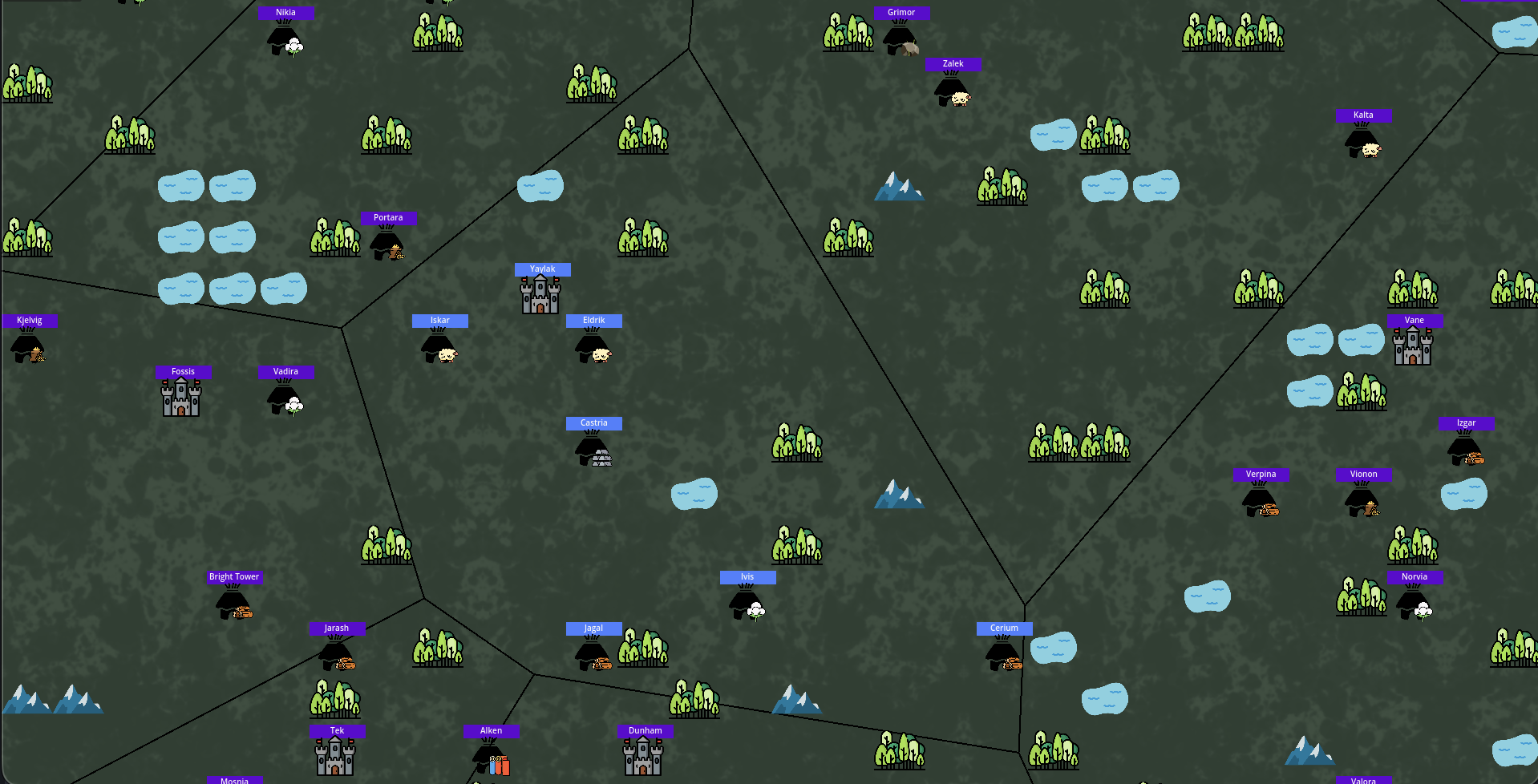
The map is built on a logical grid for movement and collision. Several entities can share a single cell: armies, cities, and villages. Visually, two armies standing next to each other may appear to occupy the same tile — that is intentional.
Economy
Cities generate income through population taxes. Villages produce a single resource type each — one village, one resource.
That split matters in war. Losing a village does not always mean losing the region, but it does mean losing whatever that village produced. Holding the capital keeps the region; holding the right villages keeps the economy running.
Where settlements are placed on the map — and how much each one is worth — should guide both your defenses and your targets. Protect what pays; strike what hurts.
War
War is not just about taking ground. How aggressively you fight changes the entire balance.
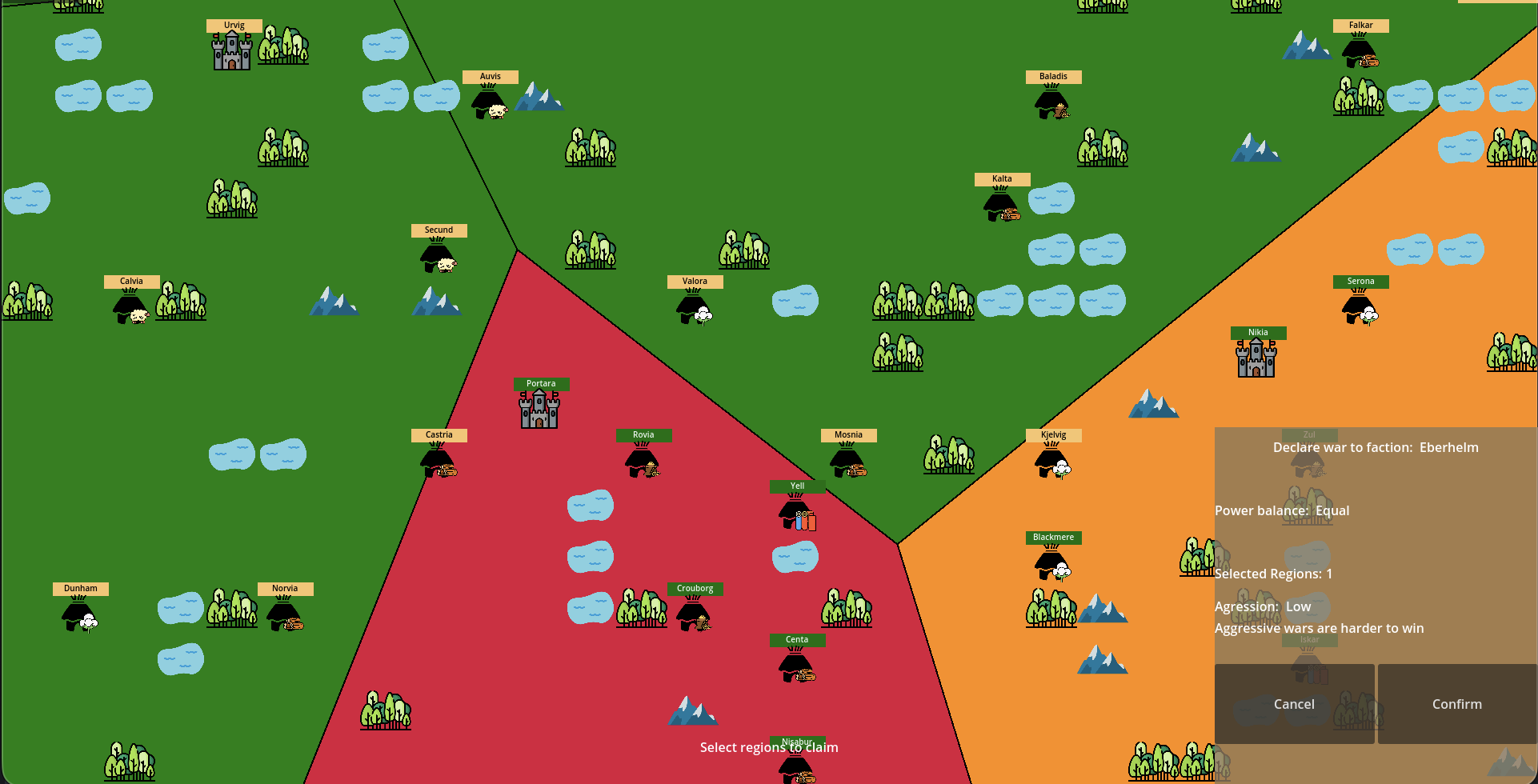
Push a faction to the brink — try to strip away everything it has — and it will fight back with major bonuses against the invader. If several enemies unite to wipe one faction out, those bonuses become extreme.
Every such lopsided conflict triggers war shock for the faction under pressure. War shock raises military and economic efficiency: the higher it climbs, the harder that faction fights and the better its income holds up under strain. A cornered enemy is not an easy target.
Choose your wars carefully. Total conquest is possible, but it is rarely cheap.
What’s Next
The first release focuses on military mechanics. Next series will expand diplomacy and administration: casus belli, military alliances, coalitions, support opposition factions, governance types, and propaganda. Economic development will carry its own costs — populations in wealthy, developed states will be less willing to march to war.
A 3D PC release on Steam is planned for the near future.